Pygmalios Y — AI Reasoning Engine
Your data shows what.
Y tells you why.
Y is Pygmalios' AI engine that goes beyond dashboards. It ingests 150+ store metrics, competitive intelligence, and market data — then answers the why behind every number with daily briefings that diagnose problems, recommend actions, and cite their sources.
What Y actually does
Not another dashboard. A reasoning engine.
Y cross-references store performance, competitor intelligence, and market trends — then tells you what to do about it.
Diagnose conversion drops
Conversion fell 8% last Tuesday at your flagship store.
Y recommends Queue wait times hit 22 min during lunch — checkout #3 was unstaffed 12–2 pm. Adding one staff member would recover an estimated €4,200/week.
Spot competitor moves
A competitor opened a flash sale 500m from your location.
Y recommends Competitor foot traffic surged 34% yesterday. Your passer-by capture rate dropped 11%. Consider matching their signage or running a counter-promotion.
Optimize staff scheduling
Weekend staffing costs are rising but conversion is flat.
Y recommends Saturday peak shifted from 14:00 to 11:00 over the last 6 weeks. Realigning 2 FTEs to the new peak window would save €1,800/mo without impacting service.
Predict queue overload
It's 11:45 am and the lunch rush is about to start.
Y recommends Based on the last 8 Tuesdays, queue length will exceed 12 people by 12:15. Opening self-checkout lane 2 now will keep wait time under 4 min.
Benchmark across regions
You manage 40 stores and need to find underperformers.
Y recommends Store #17 (Bratislava) is 23% below regional conversion average despite 18% higher traffic. Dwell time in the fitting room zone is 40% shorter — layout review recommended.
Morning briefing
It's 7 am. You open Y before your coffee.
Y recommends Yesterday: 11,284 visits (+3.2%), conversion 24.1% (stable). Alert: Zone B dwell time dropped 18% — new display installed Friday may be blocking the path.
The intelligence layers
Multiple data layers. One coherent view.
Y ingests data from 8 distinct layers — from your own store sensors to EU macroeconomic datasets — and synthesizes them into a single coherent view.
Footfall
Traffic counts, conversion rates, capture rates, and demographic breakdowns per entrance and zone.
Queue & Wait
Queue length, wait time prediction, cashier utilization, and automatic alerts when thresholds are breached.
Customer Journey
Zone transitions, dwell time heatmaps, cross-shopping patterns, and layout A/B test results.
Expert Knowledge
Searchable best practices, academic research, and case studies across retail management domains.
Competitor Intel
Competitor website changes, promotion tracking, review sentiment, and market move alerts.
Customer Voice
Aggregated online reviews, complaint pattern detection, satisfaction trend analysis across locations.
Market Data
Consumer confidence, retail spending indices, e-commerce trends, and labour cost benchmarks.
News Monitoring
Industry news, regulatory changes, and retail trend alerts curated and summarized from hundreds of sources.
Weather
Hyperlocal forecasts and historical weather patterns correlated with foot traffic and sales performance.
Industries
Built for physical spaces like yours.

Fashion & Apparel
Visual Merchandising Manager"We redesign displays every 2 weeks but have no idea which layouts actually drive conversion."

Shopping Centers
Leasing & Operations Director"Tenants demand footfall data to justify rents, but we can't attribute traffic to individual units."

Telecom Retail
Regional Store Manager"Customers walk out when the queue looks long. We don't know how many we lose or when to staff up."

Grocery & Supermarkets
Operations Director"Peak hours change seasonally but our staffing model is fixed. We're either overstaffed or underwater."
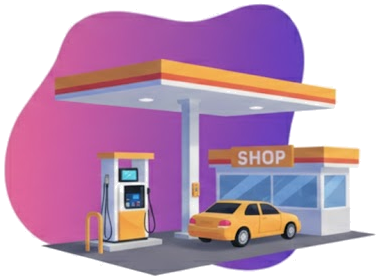
Forecourt & Convenience
Network Planner"Each site is unique — highway vs. urban, fuel-only vs. full shop. One-size analytics don't work."

Museums & Cultural Venues
Visitor Experience Lead"We know total attendance but not how visitors flow between exhibitions or which rooms are overcrowded."
FAQ
Frequently asked questions
What is the Y AI reasoning engine?
Y is Pygmalios' proprietary AI engine that ingests 150+ store metrics, competitive intelligence, and market data. It goes beyond dashboards to diagnose problems, recommend actions, and cite sources in daily briefings delivered to store and regional managers.
What types of retail analytics does Pygmalios provide?
Pygmalios covers people counting, queue management, zone heatmaps, customer journey analytics, conversion tracking, and cross-store benchmarking. All data feeds into the Y engine for AI-powered diagnostics and actionable recommendations.
How does Pygmalios handle data privacy and GDPR compliance?
All analytics are fully GDPR-compliant. Pygmalios processes anonymised sensor data only — no personal data, facial recognition, or individual tracking. Data stays within EU infrastructure with enterprise-grade encryption at rest and in transit.
How long does it take to deploy Pygmalios analytics?
Most deployments go live within 2–4 weeks. Pygmalios integrates with existing sensors and camera infrastructure, so hardware changes are rarely needed. Onboarding includes sensor calibration, dashboard setup, and team training.
Can Pygmalios integrate with our existing retail systems?
Yes. Pygmalios offers REST APIs and pre-built connectors for major POS systems, ERP platforms, and business intelligence tools. Data can be exported in standard formats or consumed via real-time webhooks and streaming endpoints.
See what Y can tell you
about your stores.
See how Y transforms raw store data into daily, actionable intelligence.