The $112 Billion Cost of Staffing Misalignment in Department Stores
Retail shrinkage hit $112.1 billion in 2024—up $18 billion from the prior year. That number shows up in your P&L as margin erosion, and a significant portion traces back to how and where you deploy people. The median shrink rate across U.S. retailers sits at 1.4% of sales. Industry data suggests 73% of those losses are preventable through better coverage and visibility.
Employee theft alone accounts for 29% of total shrinkage. At some major retailers, that share climbs to 43%, with average incidents running $1,890 each. These aren't shoplifting events at the front door. They happen in back rooms, at registers, and in departments where no one's watching.
Self-checkout makes it worse. Loss rates at SCO stations run 3.5%, compared to 0.2% at staffed lanes—a 17.5x gap. If your department store uses hybrid checkout, you're bleeding money every hour those stations go under-supervised. Administrative and inventory errors contribute roughly $19 billion in losses industry-wide.
Fixed schedules, built weeks in advance from last year's numbers, can't respond to what's actually happening on the floor. Traffic spikes in cosmetics, apparel, and seasonal departments create understaffing windows that kill conversion rates.
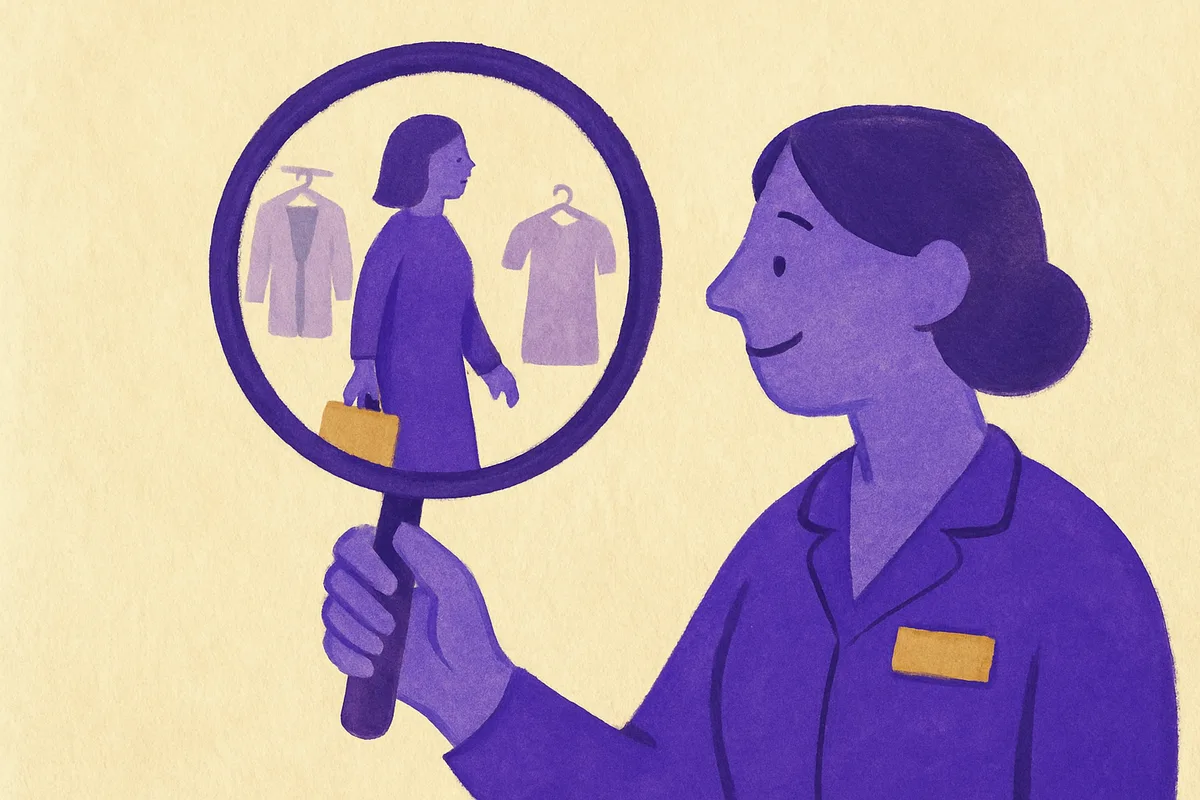
In store analytics for department stores staffing attacks this problem directly—by replacing intuition with real-time demand signals at the department level.
How In Store Analytics for Department Stores Staffing Prevents Revenue Leakage
Traffic and occupancy analytics show exactly when customers are in each department, down to 15- or 30-minute intervals. A cosmetics counter that's packed at 11 a.m. on Saturdays but dead by 2 p.m. needs a different staffing curve than your furniture section, which might peak on Sunday afternoons.
AI-driven forecasting layers in sales history, weather data, promotional calendars, and local events to predict department-level demand before shifts are built. One rainy Tuesday in October won't look like the sunny one last week—and your scheduling shouldn't pretend otherwise.
Video analytics and sensor-based counting go beyond POS data. They measure queue length, dwell time, and zone traffic in real time. POS tells you what sold. Sensors tell you who walked in, where they went, how long they stayed, and whether anyone was there to help them.
Real-time dashboards close the feedback loop during business hours. When a department crosses a traffic threshold or conversion drops below its baseline, managers get an alert—not a report three days later. The difference between "we should have had someone in shoes" and "send someone to shoes now" is the difference between a recovered sale and a lost one.
Department-Specific In Store Analytics for Department Stores Staffing Strategies
Cosmetics: High-Touch Service Windows
Beauty departments depend on personal interaction. A customer browsing foundation or fragrance is far more likely to convert with one-on-one attention. Traffic pattern data reveals when those high-propensity windows occur—often mid-morning on weekends and early evening on weekdays. Staff those windows with trained beauty associates, rather than general floor staff.
Home and Furniture: Coverage for High-Value Zones
These sections carry higher shrink risk because of product size, price, and limited sightlines. Customer decision cycles tend to run considerably longer here than in other departments. Zone traffic data helps you position associates where they can both assist and observe.
Fitting Rooms: The Conversion and Theft Nexus
Fitting rooms are where apparel conversions happen—or don't. They're also a major shrink point. Analytics that track fitting room queue length, wait time, and abandonment rates let you staff attendants precisely when they're needed. Retailers that add dedicated attendants during peak hours can meaningfully reduce both walkouts and apparel shrink in that zone.
Seasonal Departments Need Predictive Surge Staffing
Holiday displays, back-to-school setups, garden centers in spring—these departments go from quiet to chaotic in days. Predictive models that combine promotional calendars with historical traffic surges let you ramp staffing before the rush, not during it.
Measuring ROI: Labor Optimization Delivers Immediate P&L Impact
The numbers are tangible. Walmart reported $167 million in savings from just a 0.05% reduction in shrink rate—achieved partly through better staffing visibility and coverage. Department stores that adopt traffic-based scheduling can reduce labor costs by cutting overstaffing during slow periods. You're not reducing headcount—you're redeploying it.
When associate availability matches traffic peaks, conversion rates improve. The math is straightforward: customers who encounter an available, knowledgeable associate are more likely to complete a purchase—and those incremental conversions add up meaningfully across a full department store format.
Closed-loop measurement separates analytics from guesswork. You test a staffing change, measure the conversion or shrink impact over 90 days, and keep only the interventions that generate positive ROI. That discipline compounds. Each quarter, your labor model gets tighter.
Implementation Framework: From Traffic Data to Staff Deployment
Your Integration Requirements
You'll need a unified data layer connecting POS, workforce management systems, inventory, traffic sensors, and security feeds. Most department stores already have these systems—they just don't talk to each other. The first step isn't buying new hardware. It's connecting what you have.
The Operational Workflow
Start by capturing occupancy, zone visits, queue length, and conversion by department. Use AI models trained on your data to predict demand by department, hour, and day. Then dynamically allocate labor by skill, task, and zone based on forecasted and real-time demand. Flag exceptions: overcrowding, abandonment spikes, coverage gaps, suspicious shrink patterns. Finally, refine schedules continuously based on measured outcomes.
Manager Training Is Non-Negotiable
Dashboards alone don't change behavior. Your district and store managers need training on prescriptive recommendations—not just charts showing what happened last week. The goal is a manager who sees an alert at 10:15 a.m. and moves an associate to cosmetics by 10:20.
Privacy and Compliance
Camera analytics and sensor-based counting in customer areas carry privacy obligations. Anonymized people counting—where no personal data is captured or stored—satisfies most regulatory frameworks, including GDPR. Getting compliance right at the start prevents costly retrofits later.
The Future of In Store Analytics for Department Stores Staffing Operations
By 2027, AI-assisted scheduling will automatically account for weather changes, local events, promotional calendars, and historical conversion patterns—producing labor plans of a complexity and speed that manual planning cannot match. The global in-store analytics market is projected to reach $16.51 billion by 2030 at a 20% CAGR, driven largely by operational applications like these.
Computer vision at the department level will enable zone-specific heatmaps that identify not just where customers go, but where they need help and aren't getting it. Dwell time in front of a locked display case with no associate nearby? That's a lost sale you can now see and prevent.
The biggest shift is convergence. Labor decisions, loss prevention, and customer experience analytics are collapsing into a single operational view. You won't staff for service in one system and staff for shrink prevention in another. One model will balance both—dynamically, continuously, and with measurable outcomes tied to every decision.
Fixed schedules built weeks ahead from last year's numbers are already outdated. The retailers winning on margin treat their labor model as a living system, fed by real-time data, and adjusted every hour of every day.
Sources
- Pygmalios — Shrinkage statistics and employee theft data
- Grand View Research — Market size projection of $16.51 billion by 2030
- Mordor Intelligence — Market growth rate data
- R4.ai — AI forecasting and labor optimization frameworks
- Mediaset Retail — Zone-based staffing and conversion rate tracking
- KPMG Global Tech Report — Workforce optimization through predictive analysis