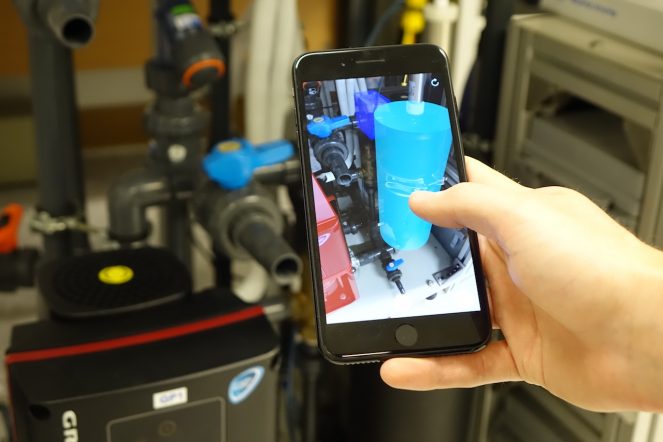
As a grad student, I worked on a research project that contributed to the Industry 4.0 initiative. Industry 4.0 builds on advancements in Cloud Computing, Cyber-Physical Systems, and Internet of Things (IoT) to create smart factories with a high degree of automation, the ability to self-adapt to changes over time, and customize their behavior to address specific user needs. One of the key building blocks of Industry 4.0 is the concept of Digital Twins.
Digital Twins are models that enable a high degree of awareness of physical processes and activities happening at factories in real-time.
Such context-awareness can support a wide range of activities from production planning to maintenance and optimization of production lines. Granular data from sensors placed around industrial systems supports simulation of their operation and prediction of future events. It can be used to predict future condition of industrial machines which enables their maintenance to be scheduled before it is too late. Awareness of events and processes that happen in factories is instrumental to the vision of smart factories.

At Pygmalios, we take a similar approach to transition traditional brick and mortar shops to take part in Retail 4.0.
Awareness of activities and behavior of customers inside stores is crucial to enable store-owners to improve the shopping experience and revenue of their stores. And there is no better way to gain this awareness than to use real-time and granular data from IoT sensors.
Data about the paths of customers in stores, their demography, and purchases provide similar value for improving retail stores as contextual data from factories has for improving production lines. The possibilities, as well as the challenges, are endless, which is also why I am excited to work at Pygmalios.

“Digital Twins” of retail stores created using Pygmalios Analytics.
Matus Tomlein, Data Science Engineer